Peripheral Artery Disease
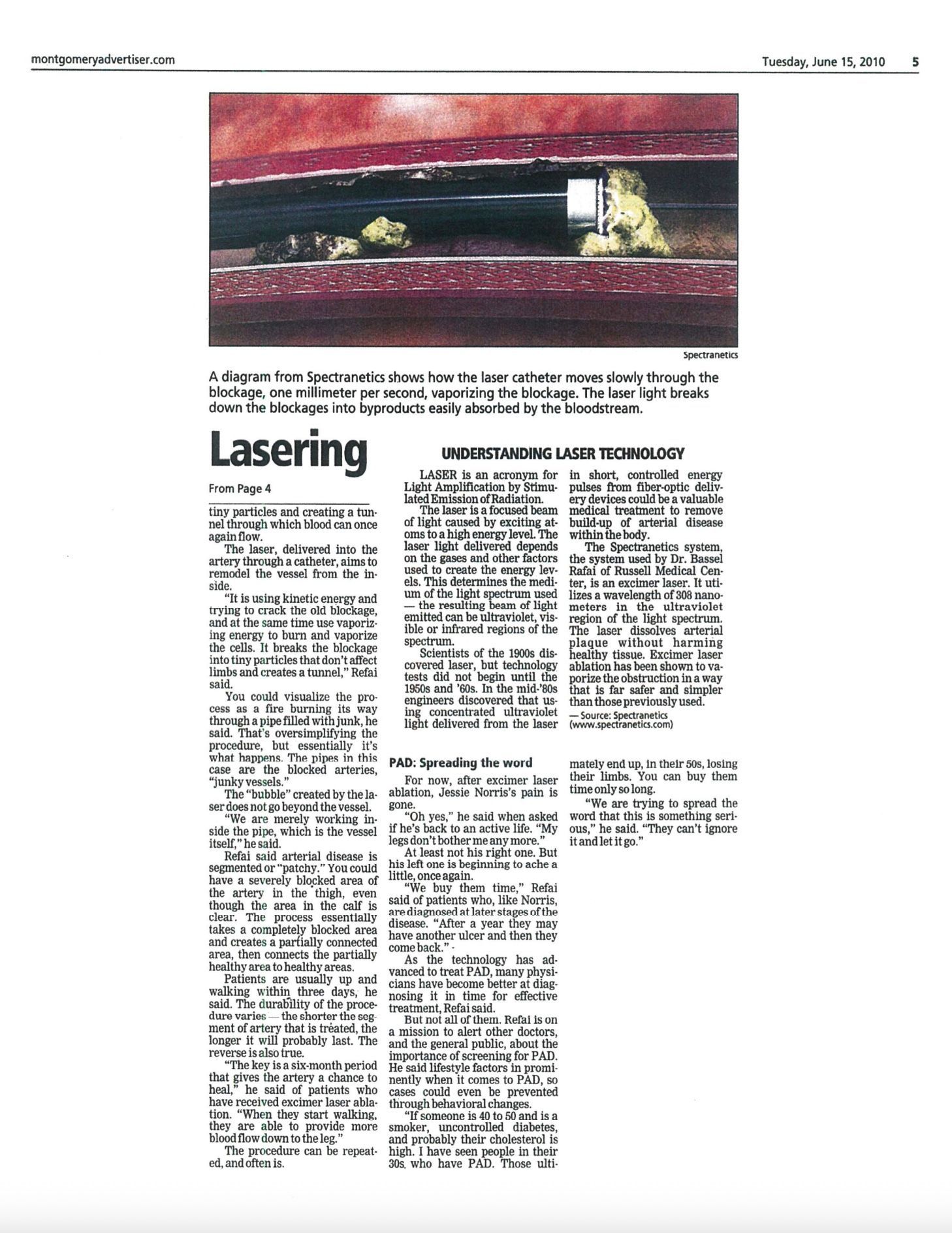
A diagnosis of peripheral artery disease used to mean a high likelihood of amputation at some point. However, with recent advances from Dr. Refai, these scenarios are becoming more and more infrequent with the repair of arteries becoming possible. More than 100,000 foot, toe or leg amputations result each year from disease, according to Spectranetics, a technology company at the forefront of excimer laser ablation.
"While excimer laser technology was a major breakthrough in treating PAD, it could be difficult to pinpoint blockages without special dyes," says Refai. However, now the results are much better and blockages are able to be targeted more precisely.
Many people
dismiss leg pain as a normal sign of aging. However, it could be sign of something more serious like PAD. PAD leg pain occurs in the muscles and not the joints. If you're having recurring pain, talk to your health-care professional and ask them about PAD.
PAD Quick Facts
List of Services
-
List Item 1List Item 1
| The most common symptoms of PAD are cramping, pain or tiredness in the leg or hip muscles while walking or climbing stairs. Typically, this pain goes away with rest and returns when you walk again
-
List Item 2List Item 2
Many people mistake the symptoms of PAD for something else.
-
List Item 3List Item 3
PAD often goes undiagnosed by health-care professionals.
-
List Item 4List Item 4
People with PAD are at higher risk for heart attack and stroke.
-
New List Item
You can take control by leading a heart-healthy lifestyle and following the recommendations of your health-care professional.
-
New List Item
Left untreated, PAD can lead to gangrene or amputation.
-
New List Item
If you smoke or have diabetes, you have an especially high risk for PAD.
-
New List Item
Most cases of PAD can be managed with lifestyle changes and medication.